
the app that deleted itself
How Instagram was built by deleting almost everything Kevin Systrom had already made

Kevin Systrom spent five months building an app called Burbn. Then he deleted almost all of it and became a billionaire from what was left.
Shipping fast and iterating constantly is real skill. None of it matters if the thing being built isn't the right thing yet.
Instagram’s real origin story is Systrom deleting almost everything he had already built, and keeping the one thing a hundred users kept quietly using anyway.
That’s the whole story. Here’s how it actually happened.
Burbn
It started, as many stories in Silicon Valley do, with a guy at a desk, building something just to see if he could. Before it was a billion dollar app, Instagram was just a quiet idea taking shape in Kevin Systrom’s head.
Kevin had always straddled two worlds. He loved the creative side of things, especially photography, but he also understood systems and structure. At Stanford, he studied management science and engineering and got a look at the startup world through the Mayfield Fellows Program. He interned at Odeo, crossed paths with the early Twitter team, and turned down a chance to join Facebook. After college, he joined Google, working on products like Gmail and Calendar. But he wanted more. He applied to Google’s Associate Product Manager program, didn’t get in.
The creative pull had been there for a long time. During a semester abroad in Italy, Kevin’s photography instructor handed him a Holga, a plastic toy camera known for soft focus and strange distortions. At first it felt like a downgrade. Then the images started coming out imperfect, emotional, oddly timeless. They didn’t just show what something looked like. They made it feel like a memory. That experience planted a seed he’d come back to years later.
Restless at Google, Kevin left for a startup called Nextstop. He had no formal programming background, so he started teaching himself to code at night, just for fun, building small experimental side projects. One of them combined Foursquare's check-ins with the points and social mechanics from Mafia Wars, and that project became Burbn, a name that also nodded to his fondness for bourbon. He built the earliest version in HTML5, with no real design work put into it yet, and passed it along to friends to try.
At a VC meetup at the Madrone Art Bar in San Francisco, Kevin caught the attention of Steve Anderson from Baseline Ventures. In the winter of 2010, Anderson offered $250,000 in seed funding. Andreessen Horowitz matched the offer quickly. But the money came with one condition. Kevin couldn’t do this alone. He needed a cofounder.
That’s when Mike Krieger entered the picture. Kevin often brought his laptop to a café in the Mission District, where he kept running into Mike, a fellow Stanford grad and Mayfield Fellow working on his own projects while spending his days at Meebo, a real time messaging startup. Kevin showed him Burbn and made his pitch. They worked together on small features during evenings and weekends, just to see how it felt. It clicked. Mike left Meebo and joined full time.
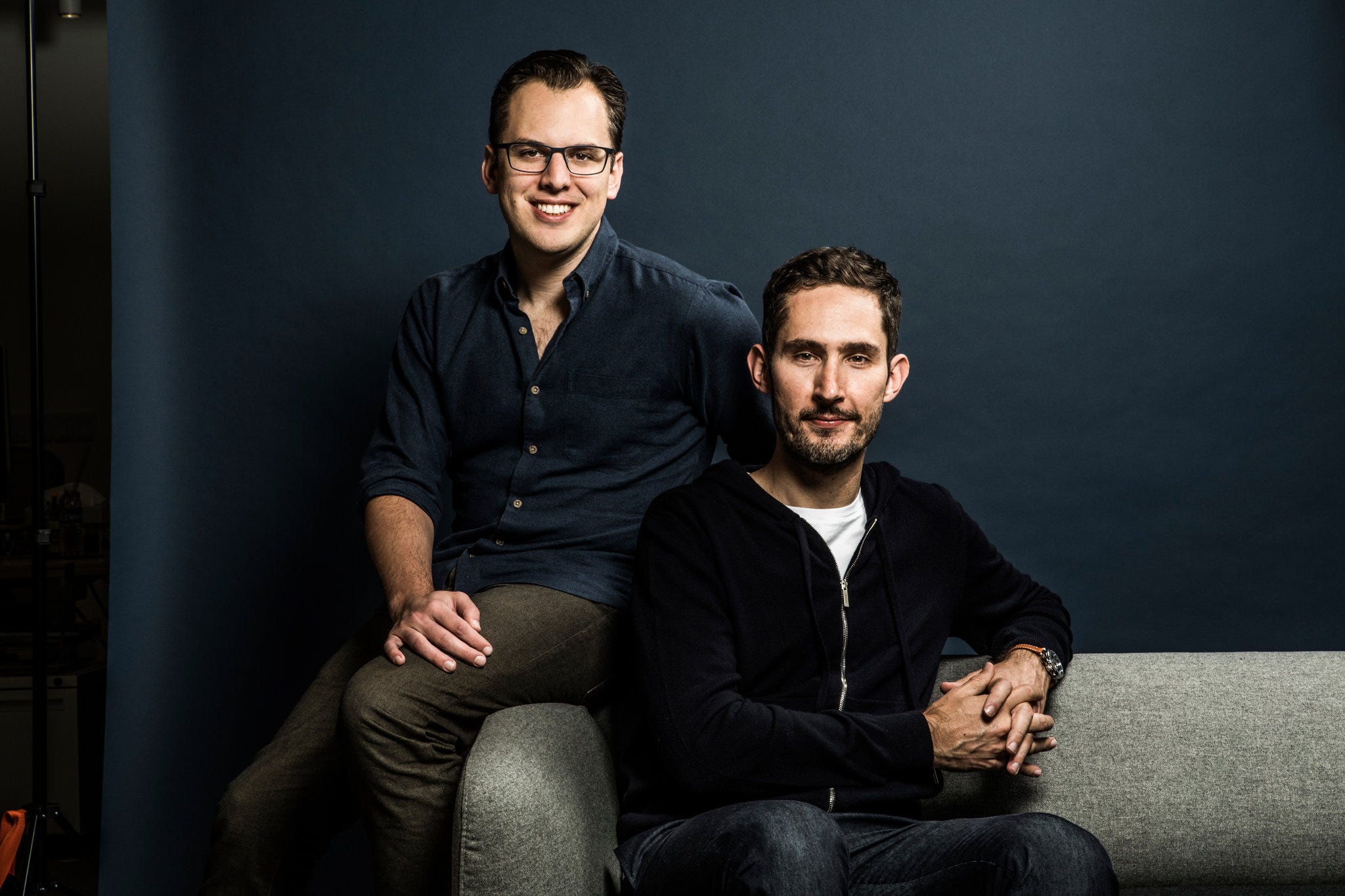
On Mike’s actual first day working on it, Kevin told him the truth without softening it. Burbn wasn’t going to survive. Foursquare already had too much of a lead. If they wanted a real shot, they had to simplify.
The data behind that call wasn’t dramatic. Burbn had somewhere around a hundred users. But the real signal wasn't only usage, it was the shape of the market around it. There were already dozens of check-in apps competing for the same small space Burbn was in.
Kevin and Mike looked at what Hipstamatic was doing at the time, a popular app that made phone photos look good but had no way to share them anywhere. The gap between that and something like Facebook’s sharing and commenting was what they decided to build toward. Everything else about Burbn, the check-ins, the plans, the points, the badges, got cut. What survived was a photo, a caption, a comment, and a like.
This was what good product managers do. They listen, observe, and adapt. They let go of ideas that aren’t working, no matter how much time or effort went into them. Kevin didn’t try to force Burbn into success. He looked at the data, watched how people actually used the app, and found the real behavior worth building around.
Kevin wrote the backend. Mike designed the iOS app. The prototype was basically an iPhone camera app with social and commenting functions. The early version was solid, but it still lacked a spark.
That moment of clarity came on a beach in Mexico. Kevin’s girlfriend asked a simple question: why did their friend’s photos always look better?
The answer was filters.
That question took Kevin back to his time in Florence and the memory of the Holga camera. He remembered how those flawed images made everything feel nostalgic and human. It clicked. People don’t just want to share photos. They want their photos to feel worth sharing. Right there on the beach, Kevin opened his laptop and began designing what would become their first filter. It was called X-Pro II.
Around this time, they decided the app needed a new name, something that captured the speed of sharing and the visual feel of photography. They landed on a fusion of instant and telegram.
Instagram.
They launched it on the Apple App Store just after midnight on October 6, 2010. By morning, the servers were melting. Tech blogs had picked it up, and 25,000 people downloaded the app in the first twenty-four hours. Kevin and Mike spent the day racing to keep it online.
That is how Instagram began.
Instagram launched fast and grew faster. Within 67 days, it hit one million users, beating the early pace of Facebook and Twitter. Its clean design and easy photo sharing made it an instant habit. By early 2012, it raised $57 million, and launched on Android. Just days later, Facebook acquired it for $1 billion. At the time, Instagram had no revenue, no business model and only 13 employees.
Where It Stands Now
By the middle of 2026, Instagram had crossed 3 billion monthly active users, making it the third largest social platform on earth. Meta doesn’t disclose Instagram’s revenue on its own, but independent estimates put it somewhere between 71 and 84 billion dollars in 2025 alone, a figure that now represents well over a third of everything Meta earns from advertising, and a share that keeps growing every year. Roughly half of all time spent on the app now goes to Reels, a format that didn’t exist until 2020, on a platform that itself didn’t exist until Systrom deleted almost everything he’d built to make room for it.
None of that scale was visible in the spring of 2010. What existed then was a hundred users, most of them ignoring the feature Kevin Systrom had spent the most time designing.
The Key Takeaway
Burbn had every feature a social app in 2010 was supposed to have, and Systrom cut nearly all of them within months of getting funded to build them. Fifteen years later, the single feature that survived that cut is generating billions of dollars a year and touching a meaningful fraction of everyone on the internet.
Subtraction is rare in business writing because it looks like failure while it’s happening. Adding a feature gives you a demo, something to show the team on a Friday. Cutting a feature gives you nothing to point to except the absence of something that used to be there. Systrom’s cut left him with a confession to make to his own brand new cofounder on day one, that the product they were both supposed to be building wasn’t going to survive.
The same instinct built Apple’s return in 1997. You could read more about it here. Jobs killed seventy percent of Apple’s product line. Systrom did the same thing to this product. Check-ins, points, and badges went, for the same reason Apple’s Newton went.
“People think focus means saying yes to the thing you’ve got to focus on. But that’s not what it means at all. It means saying no to the hundred other good ideas that there are. You have to pick carefully. I’m actually as proud of the things we haven’t done as the things I have done. Innovation is saying no to 1,000 things.”
- Steve Jobs
The size of the company just changes how visible the mistake is while you’re making it. Apple’s bloat made a Wired cover. Burbn’s bloat was invisible to everyone except a small circle of friends testing a cluttered app that hadn’t yet found its one clear reason to exist.
It is genuinely difficult to let go of something you’ve spent weeks, months, or years building. But in business and in life, the sunk cost fallacy catches up with everyone eventually. The only real choice is whether you notice it and move on while it’s still cheap to, or wait until the decision gets made for you.
References
Instagram’s Kevin Systrom: The Stanford Billionaire Machine Strikes Again
Instagram: The dog that launched a social media giant
How Instagram Went From Idea to $1 Billion in Less Than Two Years
Instagram’s founder had no programming training. He’s a marketer who learned to code by night
How Kevin Systrom pivoted a failed check-in app into Instagram